Original, sequel and deluxe: identify the right title
A familiar character or nearly identical name does not make two slots interchangeable. A Zora catalogue card may represent an original game, a sequel or a separately configured edition. The full title is the first identifier; the provider and in-game information panel help distinguish the rest.
Use a version comparison when a feature you expected is missing. Put the two full names side by side and compare reel count, visible rows, win evaluation and the actual trigger description. A sequel may keep the theme while changing from paylines to another system. A deluxe label is part of the name, not a guarantee of more favourable terms, a higher RTP or a larger chance of winning.
Record bonus modes separately. One title may use randomly selected expanding symbols, another persistent wilds, and a third a purchased feature option. Similar feature artwork can conceal different trigger counts, stake bases and reset conditions. Avoid carrying an example calculation from one edition into another until the rules confirm that the same calculation applies.
For an article screenshot, show enough of the title or information panel to identify the edition. A cropped reel grid without its name can illustrate a layout but cannot substantiate which game was opened. Date the observation and distinguish a catalogue listing from a loaded game. If a version cannot be opened in the relevant account or location, describe that limitation instead of presenting another edition as a verified substitute.
Use an identity record before comparing rules
Write the complete displayed title, provider, route or card identifier, loaded mode and date. Add a build or rules identifier if the panel exposes one. These fields serve different purposes: the title distinguishes editions, the route locates the catalogue entry and the in-game panel describes the loaded context. No single decorative screenshot necessarily captures all three.
If a guide names an original game but illustrates a later edition, the reader can misunderstand trigger conditions or total cost. Keep captions tied to the actual image. Similar artwork is useful for recognising a family, but it is weak evidence for exact mechanics. A clear unknown field is preferable to borrowing the version number from another site.
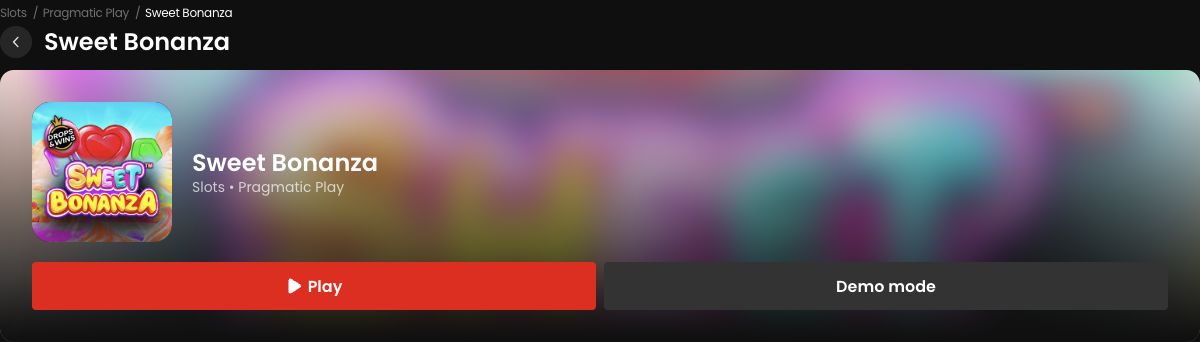
The Sweet Bonanza demo shows why context matters
On 9 November 2026, Zora’s public original Sweet Bonanza card on the pragmatic-vs20fruitsw route described 96.48% RTP and high volatility. Its opened demo information, on Game rules page 4 of 6, instead displayed minimum RTP 96.49%, maximum RTP 96.6% and low volatility. The screenshot records an actual discrepancy between the public description and that demo’s rules surface.
This does not establish the real-money model or prove which description applies to every player. It establishes that identical naming across a card and opened demo is insufficient to assume all displayed parameters match. Keep both observations with their contexts. Selecting the larger percentage or preferred adjective would conceal the evidence rather than resolve it.
Trace a missing feature to a specific rule difference
Suppose a reader expects an expanding symbol but the opened information explains only a substitution wild. First check whether the expected feature belongs to another edition or a bonus mode. Then compare the trigger and persistence rules. A feature absent from ordinary play may be restricted to a particular state; it should not be declared missing solely from one normal-spin screenshot.
The comparison should name the exact difference, such as fixed paylines versus count-anywhere evaluation, or a multiplier that resets each round versus one carried through a feature. Do not infer that a deluxe name is an upgrade in expected return. Edition names are identifiers, not financial recommendations or guarantees of improved odds.
Keep future observations separate from the original record
A later visit may load another configuration or present revised information. Record it as a new observation with its own date, rather than quietly overwriting the original evidence. This preserves why an earlier screenshot and a current panel might differ. Where an inconsistency remains unresolved, say exactly which property has not been confirmed.
For a useful article, pair an identifiable grid image with the information panel that supports the particular mechanic being explained. A reel image shows geometry; a rules page supports the calculation or stated parameter. Together they can explain what was observed without claiming access to an untested real-money account, another locale or every version supplied by the provider.