What a slot multiplier actually multiplies
A multiplier in a Zora slot needs two pieces of information: its number and the amount to which that number applies. A ×5 label may affect a single symbol, one line, one cascade or an entire feature total. Comparing the labels alone can therefore produce the wrong expectation.
For an illustrative example, suppose a qualifying combination pays 2 units before a ×5 multiplier. If the rules apply the multiplier to that combination, its result becomes 10 units. A separate 1-unit win may remain unchanged. Adding both wins first and multiplying 3 by 5 would be incorrect unless the game explicitly applies the multiplier to the combined result. Also check whether the displayed win is already multiplied, because multiplying that figure again double-counts the feature.
Multiple multipliers introduce another distinction. Two symbols marked ×2 and ×3 may combine by addition, multiplication or another stated rule. Never assume that they produce ×6. In some games a meter rises through consecutive cascades and resets after a non-winning outcome; elsewhere its value persists throughout a feature. Read the reset condition alongside the maximum value.
A large maximum multiplier describes a possible rule outcome, not a likely session return. It also may be restricted to a bonus mode. When recording a round, capture the mode, the qualifying win, the multiplier and the final credited result. Those four items are more useful for explaining the calculation than a screenshot of the multiplier alone.
Write the base in words before doing arithmetic
State what the multiplier applies to: one line award, one evaluated tumble, the total of a sequence or a particular feature component. Then write the unmultiplied base and factor. If a hypothetical 0.40-unit component receives 5x while a separate 0.10 remains unchanged, the combined result is 2.10, not 2.50. Multiplying the entire sum would change the scope of the rule.
If the interface already shows 2.10 as the final award, applying 5x to it again invents another benefit. The caption beside a screenshot should therefore explain whether the visible amount is before or after the factor. A multiplier image without its calculation base is incomplete evidence.
Several factors do not reveal their combination rule
Values marked 2x and 3x could contribute a combined 5x under an additive rule or 6x under a multiplicative rule. Another title may select one value or use a meter that incorporates previous events. The symbols alone cannot decide among these possibilities. Read the specific wording and, where available, the worked example in the loaded information panel.
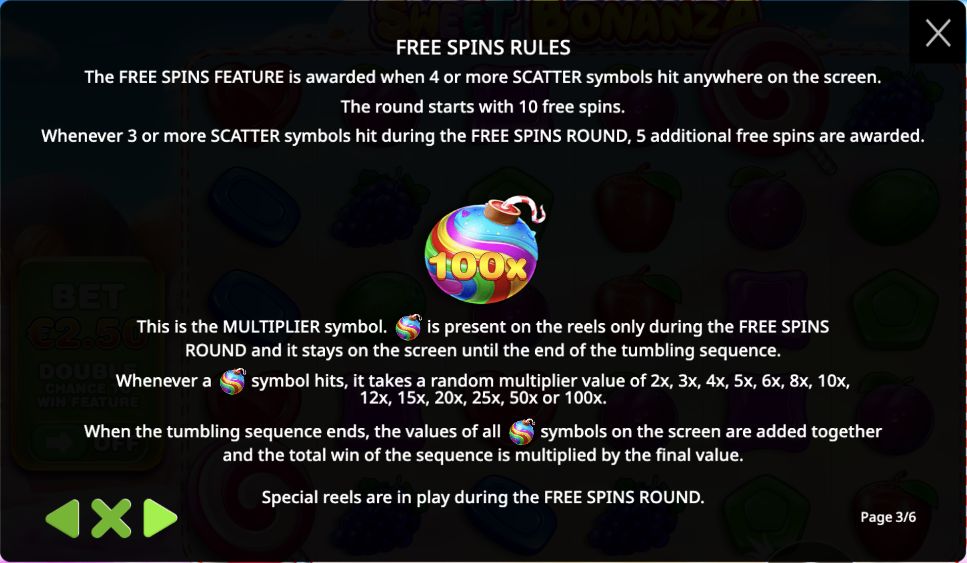
The observed Sweet Bonanza demo includes a feature-multiplier rules panel. Use that panel for the observed build rather than importing a calculation from another Pragmatic title. A shared provider does not make multiplier arithmetic universal, and a sequel may retain the artwork while changing how factors are accumulated or when they apply.
Reset conditions explain apparently inconsistent screens
Two captures can show different factors because one is inside a continuing feature and the other begins a fresh paid round. Record the mode and event boundary. A factor carried across feature spins is different from one carried only through consecutive tumbles. Both may increase visually, but their future scope is controlled by separate reset rules.
For a disputed calculation, retain the qualifying base award, active factor, feature stage and final credited result. These four facts let the arithmetic be reconstructed. A maximum advertised multiplier is not evidence that the largest factor was active in the observed round, nor does a low factor imply that a larger one is due next.